

Weather-Proofing Your Tipi: Keeping Your Event Safe in UK Weather
The UK is known for many things - fish and chips, Mary Poppins, the Royals, just to name a few. But we’re also famous for something slightly less exciting: our unpredictable weather, namely, rain. And when you’re hosting an outdoor event and you’ve booked a tipi, the worry about bad weather conditions can creep in, and understandably so.
But I am here to put your anxiety at ease. Fortunately at Mikata, we’ve spent years putting up tipis in rain, high winds and stormy conditions and have become well versed in combating them all. Whether you're planning a wet weather wedding, a windy festival weekend, or a private celebration, your tipi will be safe, secure and most importantly, weatherproof.
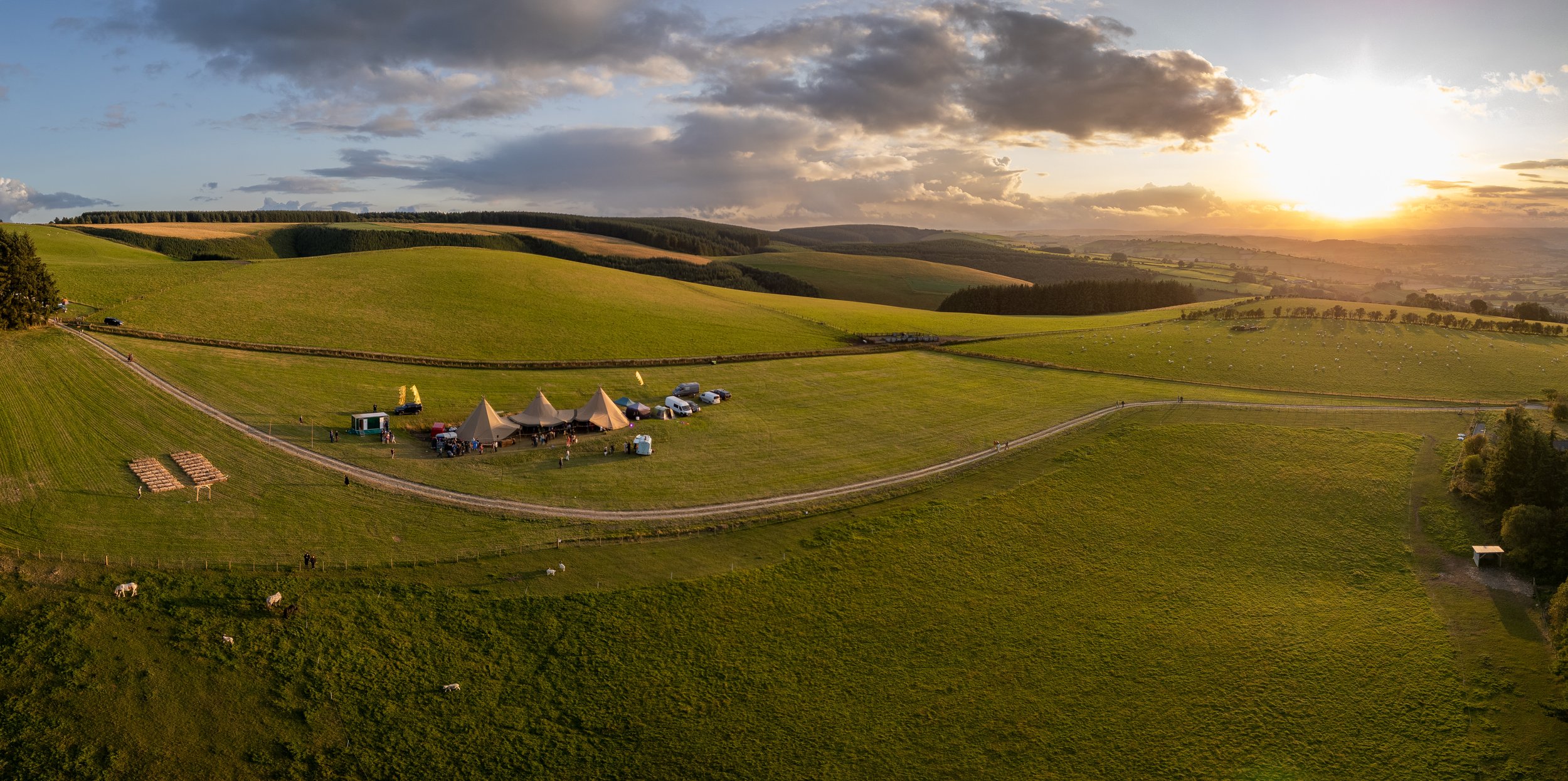
Beautiful Tipi Hire in the depths of Wales
Rain, Rain, Go Away – Keeping Your Tipi Dry in Wet Weather
Rain is the most common concern for clients for their tipi hire in bad weather. Thankfully, whether it be a rainy wedding or a wet festival, modern tipis are built to handle it, and there's a few precautions that can be taken to keep you dry.
So here’s how we keep your tipi interior warm, dry, and protected from heavy rain:
Ground Sheets Under Dandy Dura Matting
If you’re using Dandy Dura matting, we recommend adding a ground sheet beneath it, especially on softer grass or ground that doesn’t tend to absorb water well. This works as a barrier, helping prevent water from rising into the matting keeping it nice and dry.
Canvas Tensioning
One of the simplest yet most important steps in tipi rain protection is keeping the canvas well-tensioned. A tight canvas prevents water pooling and potential leakages. This is a high priority for the team whilst building the structure.
Lowering the Raised Sides
Although the preferred presentation of the Tipi of having an inviting entrance with raised sides, a tactical side lowering could help shield the interior from incoming rain. Now this isn’t to say you have to have it in this configuration always, but it could come in handy.
Waterproof Canvas Technology
Our canvases are supplied by Tentipi, and coincidentally, their canvases are made from an impregnated cotton-polyester blend specifically designed for water resistance, durability and breathability. So even in heavy rainfall, the structure itself remains watertight.
Gone With the Wind – Making Your Tipi Wind-Resistant
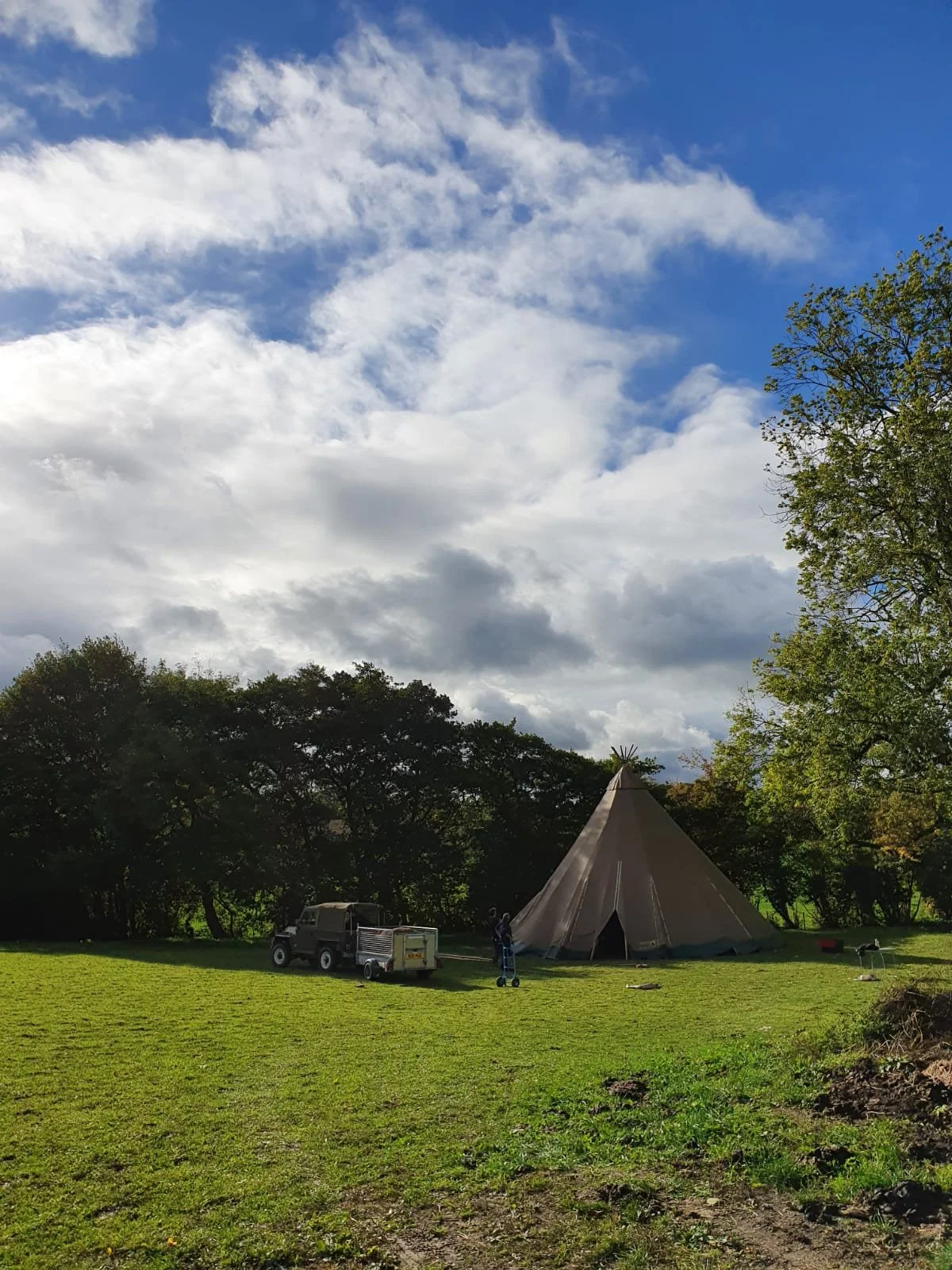
Wind is the true arch-nemesis of a tipi, but we’ve fought this battle many times, sometimes with winds up to 55mph and lived to tell the tale.
Here’s how we improve tipi wind resistance:
Heavy-Duty Secondary Pins
We tighten down the Tipi’s perimeter by using 45cm steel stakes called secondary pins. These anchor the tipi deeply into the ground and prevent shifting during gusty conditions.
Lowering the Sides to Reduce Lift
Just like with rain, dropping the sides reduces the risk of the tipi catching the wind and ballooning. This step prevents unnecessary strain on the poles and can potentially damage the canvas.
Installing Metal Storm Braces
For high-wind forecasts, we install metal storm braces (wind braces). These cross between the main poles reinforce the Tipi and add structural rigidity, making the tipi far more wind resistant.
Your Tipi Is Ready for Any Weather
From heavy rain to high winds, we take every precaution to make your event as comfortable and weatherproof as possible. Between our installation techniques and Tentipi’s advanced weather-resistant materials, your tipi will be ready to face whatever the British weather throws at it.
So whether you’re planning a tipi festival hire, wedding tipi, or a private celebration, you can relax knowing the weather won’t be getting in the way of your special